
Payment Gateway vs Merchant Account: What’s the Difference?
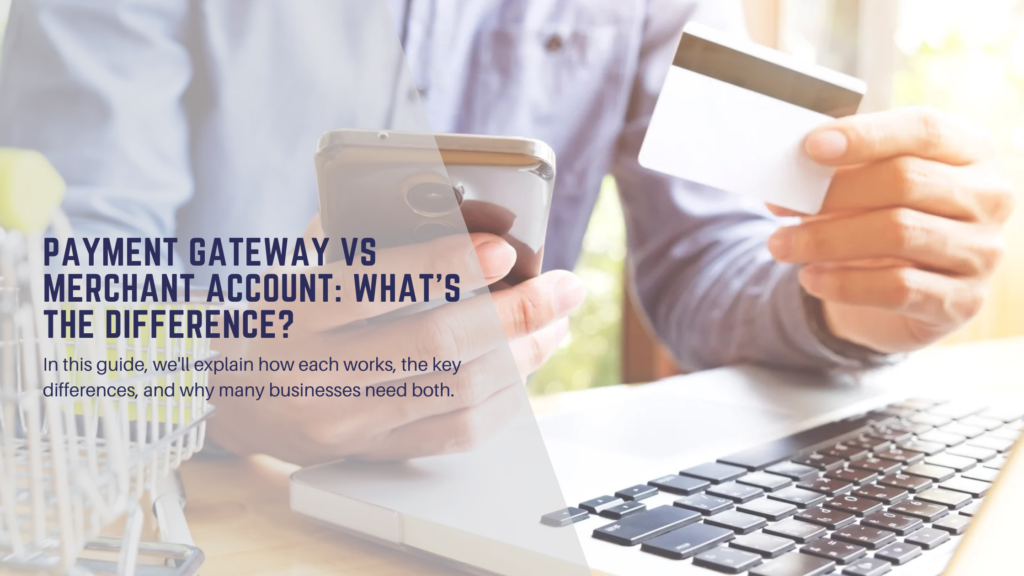
If you’re starting an online business or looking to improve your payment infrastructure, you’ve probably come across the terms payment gateway and merchant account. While they work together to process online payments, they serve very different purposes.
Understanding the difference between a payment gateway and a merchant account is essential for choosing the right payment solution for your business, especially if you operate in a high-risk industry.
In this guide, we’ll explain how each works, the key differences, and why many businesses need both.
What Is a Payment Gateway?
A payment gateway is the technology that securely transmits payment information between your website, your customer, and the payment processor.
Think of it as the digital equivalent of a card machine in a physical shop.
When a customer enters their payment details online, the payment gateway:
- Encrypts sensitive card information
- Sends transaction data securely
- Requests payment authorisation
- Returns approval or decline messages
- Helps protect against fraud
Without a payment gateway, online transactions cannot be processed securely.
What Is a Merchant Account?
A merchant account is a special type of business bank account used to receive and hold card payment funds before they are settled into your main business bank account.
When a customer makes a payment:
- The payment is authorised.
- Funds are temporarily held in the merchant account.
- The acquiring bank processes the transaction.
- Funds are settled into your business account.
Merchant accounts are provided by acquiring banks or specialist payment providers.
Payment Gateway vs Merchant Account: The Key Difference
The simplest way to understand the difference is:
A payment gateway transmits payment information.
A merchant account receives and processes the funds.
You need the gateway to securely collect payment details, and you need the merchant account to receive the money.
How They Work Together
Here’s a typical online payment process:
Step 1: Customer Makes a Payment
The customer enters their card details on your website.
Step 2: Payment Gateway Encrypts Data
The payment gateway securely sends the transaction information for authorisation.
Step 3: Acquiring Bank Reviews the Transaction
The bank checks the transaction and approves or declines it.
Step 4: Funds Enter the Merchant Account
Approved funds are deposited into the merchant account.
Step 5: Settlement
Funds are transferred to your business bank account according to your settlement schedule.
This entire process typically happens within seconds.
Do You Need Both?
In most cases, yes.
If you accept online card payments, you generally need:
- A payment gateway
- A merchant account
- An acquiring bank relationship
Some modern payment providers bundle these services together, while others offer them separately.
What Businesses Need a Merchant Account?
Any business accepting card payments online may require a merchant account.
Examples include:
- eCommerce stores
- Subscription businesses
- Travel companies
- Online education platforms
- SaaS providers
- Digital product sellers
- High-risk businesses
High-risk merchants often require specialist merchant accounts due to increased banking requirements.
What Businesses Need a Payment Gateway?
A payment gateway is essential for businesses accepting payments through:
- Websites
- Mobile apps
- Online booking systems
- Subscription platforms
- Digital marketplaces
Without a payment gateway, payment information cannot be securely transmitted.
High-Risk Businesses: Why the Difference Matters
For businesses operating in high-risk sectors, understanding this distinction is particularly important.
Industries such as:
- Online gambling
- Forex trading
- Cryptocurrency
- Adult services
- Nutraceuticals
- Subscription services
Often require specialised merchant accounts alongside high-risk payment gateways.
Using the wrong provider can result in:
- Declined applications
- Frozen funds
- Account termination
- Higher processing costs
Features to Look for in a Payment Gateway
When choosing a payment gateway, consider:
Security
Look for PCI DSS compliance and strong encryption.
Fraud Prevention
Features such as:
- 3D Secure
- AI fraud monitoring
- Real-time risk scoring
can help reduce chargebacks.
Integration Options
Ensure compatibility with:
- WooCommerce
- Shopify
- Magento
- Custom-built websites
Payment Methods
Support for:
- Cards
- Open Banking
- E-wallets
- Alternative payment methods
can improve conversion rates.
Features to Look for in a Merchant Account
When evaluating merchant account providers, consider:
Industry Expertise
Do they support your business type?
Settlement Speed
How quickly will funds reach your account?
Multi-Currency Support
Can you process international transactions?
Chargeback Management
Do they offer dispute prevention tools?
Scalability
Can the account support business growth?
Open Banking: Changing the Payments Landscape
Open Banking is becoming increasingly popular in the UK.
Regulated by the Financial Conduct Authority, Open Banking allows customers to make direct bank-to-bank payments without using card networks.
Benefits include:
- Lower fees
- Faster settlements
- Reduced chargebacks
- Improved payment success rates
Many businesses now combine Open Banking with traditional merchant account solutions.
Common Misconceptions
“A Payment Gateway Holds My Funds”
False.
The payment gateway simply transmits payment data. It does not hold money.
“A Merchant Account Processes Transactions”
Partially true.
The merchant account receives funds, but the gateway facilitates the transaction.
“I Only Need One”
In most cases, businesses require both services to accept online payments efficiently.
How Merchant Connect Helps Businesses
At Merchant Connect, we help UK businesses secure complete payment solutions, including:
- Merchant accounts
- Payment gateways
- Open Banking solutions
- Multi-currency processing
- High-risk payment solutions
- Fraud prevention tools
We work with businesses across a wide range of industries to create payment infrastructures that support growth and stability.
Final Thoughts
Understanding the difference between a payment gateway and a merchant account is crucial when building a reliable payment system.
A payment gateway securely transfers transaction data, while a merchant account receives and processes the funds. Together, they form the foundation of online payment acceptance.
Whether you’re launching a new online business or upgrading your existing payment setup, choosing the right combination of services can improve customer experience, increase approval rates, and support long-term growth.
Looking for a payment gateway, merchant account, or complete payment solution? Contact Merchant Connect today to discuss your business requirements.
Related articles
Accepting Payments From High-Risk Countries: A Guide for Businesses
Accepting payments from international customers can open up new opportunities for businesses, but it can also create challenges when customers are based in countries…
Read article
Fast Approval Merchant Accounts for High-Risk Businesses
Getting a merchant account can be difficult for businesses that operate in industries considered high risk. Traditional banks and payment providers may take longer…
Read article
Payment Gateway vs Merchant Account: What’s the Difference?
If you’re setting up payment processing for an online casino, sportsbook, betting website or other iGaming business, you’ll often come across two terms: payment…
Read article